

Album - License Terms
© All rights reserved
All album downloads are available for personal listening only.
Get in touch if you would like to license a recording for another type of use.


$15
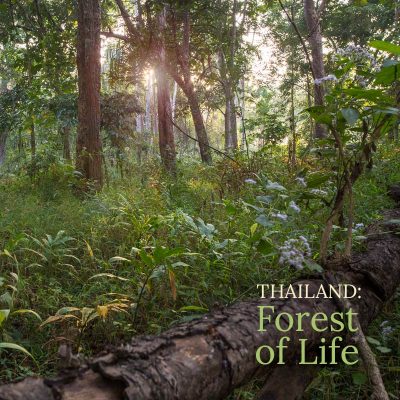
This album features the sounds of rain and thunder along with birds and wildlife in tropical rainforest, recorded in Kaeng Krachan National Park in 2014. Most of the recording was made inside the forest, with the final section recorded by an open swamp.
Kaeng Krachan National Park protects an immense area of wilderness (almost 3000 square kilometres) & is a great place to record sounds and photograph nature. It is teeming with wildlife, including wild elephants, tigers, leopards, bears, gibbons and about 400 species of birds!
The sky starts to lighten, but it’s still dark under the canopy of the rainforest, and the heavy cloud grumbles with thunder. The dawn chorus is dampened by a morning rain shower which soon lightens, and the birds become active again. Great Hornbills can be heard nearby, their deep honking calls bellowing through the forest.
Just after 10:00 the heavy wingbeats of a hornbill can be heard as it flies overhead. As the rain lightens, White-handed Gibbons start to call occasionally from the canopy.
Gentle rain sets in again (from about 19:10) and the birds remain active. The soft cooing call of a Common Emerald Dove adds a delicate rhythm to the soundscape, as do the occasional pulses of cicadas in the background. At 31:32 Dusky Langurs grunt in alarm at an unseen predator.
Close to 38:30 the gibbons begin singing again. A pair can be heard duetting, with the female making her distinctive sweeping great call, one of my favourite sounds of the Thai rainforest.
The final stretch of the album (from about 50:50) was recorded by an open swamp surrounded by rainforest. Sounding more ‘spacious’ than the recording from inside the rainforest, this section features the calls of a variety of birds including Greater Racket-tailed Drongo, Blue-winged Pitta and Puff-throated Babbler. Frogs and insects are prominent (and a few flies, that’s the reality of a rainforest marsh!)


